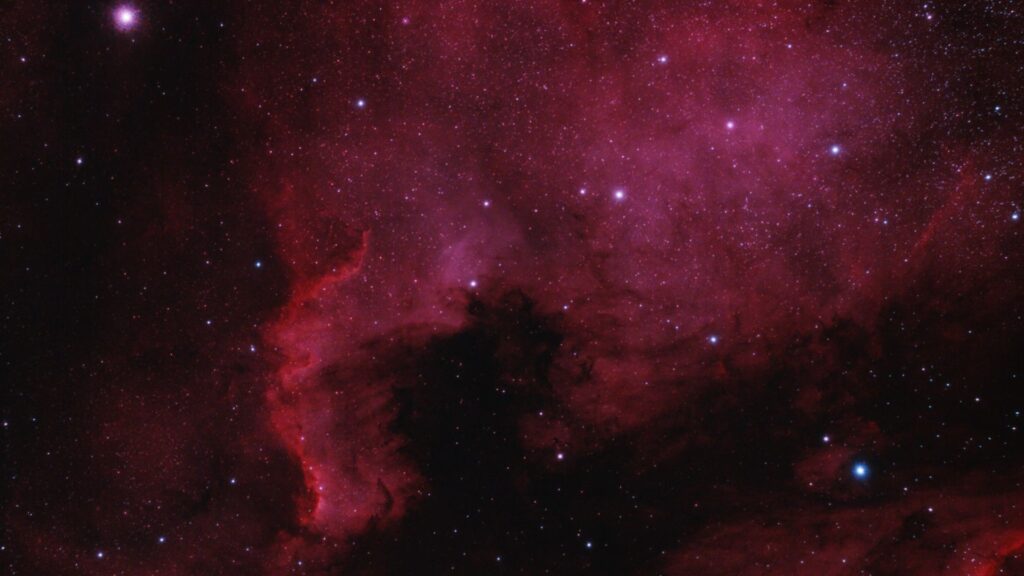
We like to think that seeing is believing. If we can touch it, measure it, or observe it through an optical lens, we accept it as real; if we cannot, it is often dismissed as impossible. However, both modern theoretical physics and the foundational sources of Islam—the Quran and authentic Hadith—reveal a different truth: beyond the retina: dimensions, spacetime, and the reality we cannot see lies a vast cosmos where human optical sight acts merely as a narrow biological filter, showing us only a fraction of physical and spiritual reality.To understand the Unseen (Al-Ghayb), we must examine how the limits of human perception intersect with spacetime physics, higher dimensions, quantum measurement, and scriptural revelation.
1. The Biological Spectrum and the Uncreated Fabric of Spacetime
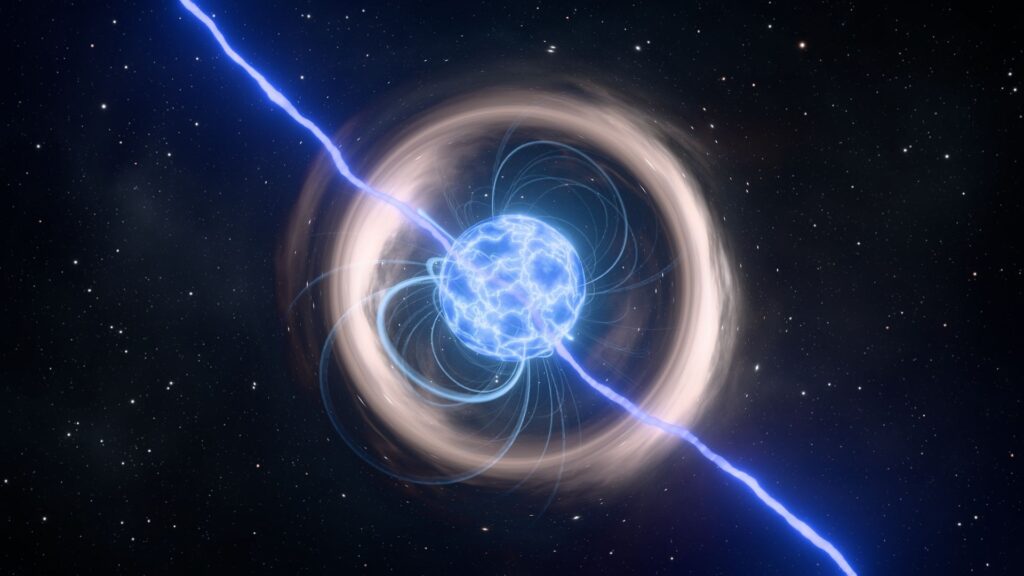
Human vision is biologically constrained. Out of the vast electromagnetic spectrum, our eyes detect only a tiny band known as visible light (spanning wavelengths from roughly 380 to 700 nanometers). Infrared waves, ultraviolet radiation, X-rays, and radio waves saturate the universe around us every second, yet they remain invisible to the naked eye.Our sensory organs filter physical space to prevent cognitive overload. But human perception is equally constrained by time. In classical Newtonian mechanics, time was treated as an absolute, uniform clock ticking throughout the universe. Albert Einstein’s Theory of General Relativity dismantled this view, proving that time is a physical metric bound to space and gravity into a dynamic fabric—spacetime.Time is a created property of our universe, not an eternal background container. Centuries before relativistic physics, Imam Al-Ghazali noted in Tahafut al-Falasifah that time is an effect generated by the relative motion of physical bodies, rather than an independent reality. Because Allah created the physical framework of spacetime, He exists completely outside of it. Measuring the Creator using temporal parameters—asking “what was before Allah” or “how old is the Creator”—presents a fundamental category error.The Quran highlights both the sanctity of time as a created metric and the transcendent nature of the Creator who exists beyond it:
The Quran highlights both the sanctity of time as a created metric and the transcendent nature of the Creator who exists beyond it:
وَٱلْعَصْرِ ١
By the ˹passage of˺ time!
إِنَّ ٱلْإِنسَـٰنَ لَفِى خُسْرٍ ٢
Surely humanity is in ˹grave˺ loss,
إِلَّا ٱلَّذِينَ ءَامَنُوا۟ وَعَمِلُوا۟ ٱلصَّـٰلِحَـٰتِ وَتَوَاصَوْا۟ بِٱلْحَقِّ وَتَوَاصَوْا۟ بِٱلصَّبْرِ ٣
except those who have faith, do good, and urge each other to the truth, and urge each other to perseverance.
Surah Al-An’am (6:103)
لَّا تُدْرِكُهُ الْأَبْصَارُ وَهُوَ يُدْرِكُ الْأَبْصَارَ ۖ وَهُوَ اللَّطِيفُ الْخَبِيرُ”
Vision perceives Him not, but He perceives all vision; and He is the Subtle, the Aware.”
Surah Al-Hadid (57:3)
هُوَ الْأَوَّلُ وَالْآخِرُ وَالظَّاهِرُ وَالْبَاطِنُ ۖ وَهُوَ بِكُلِّ شَيْءٍ عَلِيمٌ
“He is the First and the Last, the Outward and the Inward, and He is Knowing of all things.”
Hadith Qudsi — Sahih al-Bukhari (4549), Sahih Muslim (2246)
قَالَ اللَّهُ عَزَّ وَجَلَّ: يُؤْذِينِي ابْنُ آدَمَ يَسُبُّ الدَّهْرَ وَأَنَا الدَّهْرُ، بِيَدِي الأَمْرُ أُقَلِّبُ اللَّيْلَ وَالنَّهَارَ”
Allah Almighty said: The son of Adam offends Me. He curses time (Ad-Dahr), and I am [the Creator of] time; in My Hand are the night and the day.”
2. Quantum Observer Effect, Higher Dimensions, and Non-Linear Time

In subatomic physics, reality behaves radically differently depending on whether it is being actively measured. The Observer Effect in quantum mechanics—demonstrated by the famous double-slit experiment—reveals that particles exist in a cloud of probabilities (superposition) until an observation is made, forcing the wave-function to collapse into a definite state. At the fundamental level, physical reality actively changes its behavior based on the act of measurement itself.Similarly, modern theoretical models like String Theory and M-Theory hypothesize that the cosmos consists of up to 11 dimensions. In relativity, physics utilizes the “Block Universe” model, where past, present, and future coexist in a higher-dimensional continuum rather than disappearing into non-existence. Quantum non-locality shows that particles can interact instantaneously across vast distances, operating outside standard constraints of spatial travel time.When we look beyond the retina: dimensions, spacetime, and the reality we cannot see, this framework aligns directly with Quranic verses and authentic Hadith narrations detailing the Unseen (Al-Ghayb) and the non-linear realities of Al-Barzakh (the intermediate realm):
Dimensional Offsets in Creation:
A lower-dimensional observer cannot process or view a higher-dimensional presence, whereas a higher-dimensional frame can observe lower dimensions directly:”
Indeed, he and his tribe see you from where you do not see them.”— Surah Al-A’raf (7:27)
Temporal Collapse in Al-Barzakh: To an observer on Earth, centuries pass sequentially. But once a soul leaves the physical body and steps out of the spacetime fabric into Al-Barzakh, the linear clock changes. In Divine Knowledge (Dahr), the entire trajectory of creation is held as an established, unfragmented reality.This explains why the Prophet Muhammad ﷺ was shown future and unseen outcomes during the Isra and Mi’raj (Night Journey) and the eclipse prayer (Salat al-Kusuf).
In authentic narrations, he witnessed the states of people in Paradise and Hellfire—such as specific individuals undergoing consequences for slander or backbiting—as well as distinct historical events, including his statement regarding Ammar ibn Yasir (“The transgressing group will kill him” – Sahih al-Bukhari 447).
3. The Delusion of the Physical and the Epistemology of Basirah
The fact that quantum particles alter their behavior under observation proves that physical matter is not a static, independent reality; rather, human sensory tools interpret quantum interactions to form our perception of reality. The Quran consistently reminds believers that physical, worldly perception is limited and secondary compared to ultimate objective reality:
Surah Al-A’raf (7:27)>
إِنَّهُ يَرَاكُمْ هُوَ وَقَبِيلُهُ مِنْ حَيْثُ لَا تَرَوْنَهُمْ
“Indeed, he and his tribe see you from where you do not see them.” Surah Qaf (50:22)
لَّقَدْ كُنتَ فِي غَفْلَةٍ مِّنْ هَٰذَا فَكَشَفْنَا عَنكَ غِطَاءَكَ فَبَصَرُكَ الْيَوْمَ حَدِيدٌ
“You were heedless of this; now We have removed your veil, and sharp is your sight today!”
While physical optics (Basar) operate within the boundaries of visible light and 3D space, Islamic epistemology emphasizes Basirah—the inner sight centered in the spiritual heart (Qalb). Allama Iqbal observed in The Reconstruction of Religious Thought in Islam that physical observation provides only isolated fragments of the physical world.When physical instruments reach their limit at quantum boundaries, Basirah allows human consciousness to recognize the uncreated reality behind the physical universe.
While science, logic, and mathematics allow us to decipher the mechanical framework of the cosmos, they remain fundamentally silent on the questions of human purpose and morality. Empirical observation can explain the physics of the stars, but it cannot derive objective good from evil or assign intrinsic worth to human life. Religion fulfills this necessary domain, providing the transcendent direction that gives knowledge its ultimate meaning. In Islam, this divine guidance reaches its completion—establishing a framework built upon absolute human equality across race, gender, and economics, where worth is measured solely by moral integrity and spiritual consciousness.To explore more on how divine revelation intersects with the physical universe, check out our related analyses:
5 Astronomy Miracles in the Quran — An examination of cosmic phenomena described in scripture centuries before modern observational astronomy.
How Ibn Abbas Predicted the Death of the Sun — A look into classical scholarly insights on stellar dynamics and the cosmic lifespan of our sun.
Leave a Reply