1. The Crisis of Human Governance
Today, we live in a world where injustice, continuous conflict, and moral decay have become normalized. From widespread environmental destruction to the devastating human loss witnessed in places like Gaza, humanity faces a deep crisis of leadership.This ongoing suffering is not an accident—it is the direct outcome of flawed human political frameworks. When governance is built entirely on human self-interest, economic greed, and political survival, it inevitably fails to protect the weak. So today in this blog we are discussing Khilafah vs. Modern Systems: Why Divine Governance is Unique
True justice cannot exist when leaders write the rules to serve themselves.Real justice requires a system anchored in divine principles, where leadership is treated not as a privilege or power trip, but as a sacred moral trust (Amanah). As Allah states in the Quran:
“Indeed, Allah commands you to render trusts to whom they are due and when you judge between people to judge with justice.” — Surah An-Nisa (4:58)
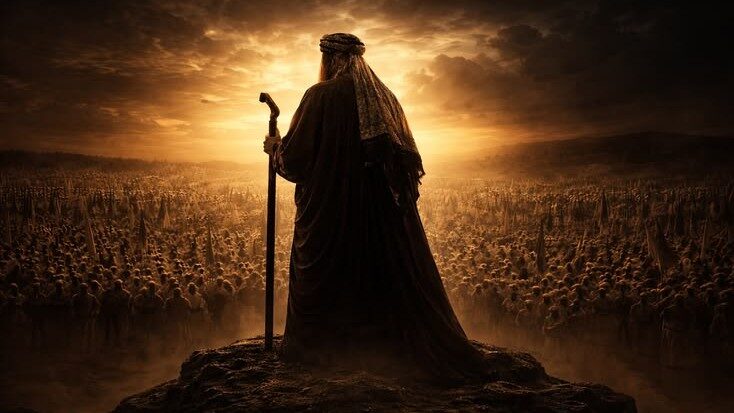
2. Comparative Analysis: Modern Democracy vs. The Khilafah
Modern democracy is widely considered superior to absolute monarchies or dictatorships because it offers citizens a voice through elections. However, secular democracy carries an inherent flaw: it measures morality by majority consensus. In a purely secular framework, what is considered “right” or “wrong” can shift based on voting blocs, political lobbying, and corporate wealth. If a majority votes to strip a minority of their rights, the system allows it.
The Khilafah during the Rashidun period (the Era of the Rightly Guided Caliphs) operated under an entirely different model:
Shura (Consultation) with Unshakeable Principles: While the Caliph consulted the public through Shura, the core laws of morality and human rights were fixed by divine decree. No majority vote could ever legalise injustice, oppression, or discrimination.
Accountability Above Power: In a democracy, a leader is primarily accountable to their political party or voters every few years. In a Khilafah, the leader is continuously accountable to divine law and to every individual citizen.
Prophet Muhammad ﷺ established the foundational principle of conditional obedience in governance, declaring:
“Obedience is required only in whatProphet Muhammad ﷺ established the foundational principle of conditional obedience in governance, declaring: “Obedience is required only in what is good/right.” — Sahih al-Bukhari, Kitab al-Ahkam (Hadith 7145); Sahih Muslim, Kitab al-Imarah (Hadith 1840).
3. The Reality of Divine Governance in History
The superiority of divine governance was not merely theoretical; it was proven through the lived actions of Prophet Muhammad ﷺ and his companions:A. Radical Equality and Poverty Relief Prophet Muhammad ﷺ eliminated tribal, racial, and class superiority, establishing a society where character and piety were the only true metrics of honor.
“An Arab has no superiority over a non-Arab, nor a non-Arab over an Arab… except by piety and good action.” — The Last Sermon of Prophet Muhammad ﷺ (Musnad Ahmad) Social welfare was institutionalized through the Zakat system. Care for the impoverished was not treated as voluntary charity, but as an enforceable right held by the poor over the wealthy.

B. Religious Freedom and the Guarantee of Safety
Far from forcing conversions, the Khilafah guaranteed religious autonomy to non-Muslim communities (Dhimmi). When Caliph Umar ibn Al-Khattab (RA) entered Jerusalem in 637 CE, he authored the historic Assurance of Umar (Al-Aghdiyya Al-Omariyya), guaranteeing the local Christian population total protection for their lives, property, and places of worship.
C. Understanding Jizya: Protection, Exemption, and Justice
The concept of Jizya is frequently misunderstood in modern political debates. It was a modest tax paid exclusively by able-bodied non-Muslim men. In exchange, non-Muslim citizens received:
Full state protection of their lives, families, and property.
Complete exemption from mandatory military service and fighting in wars (a duty required of Muslim citizens through Jihad).
Exemption from paying Zakat, which was paid only by Muslims.
The true moral nature of Jizya was demonstrated during the battle for Syria. When the Muslim armies under Abu Ubaidah ibn al-Jarrah (RA) had to temporarily retreat from cities like Homs due to a massive counter-offensive by the Byzantine Empire, the state realized it could no longer fulfill its contract to protect the non-Muslim residents.Abu Ubaidah (RA) ordered all the Jizya collected from the citizens to be returned in full, declaring:”We are returning your money because news has reached us of the enemy forces gathering against us. You made it a condition that we protect you, but now we are unable to do so.”The non-Muslim residents were stunned by this unprecedented level of honesty and justice. Historical accounts note that many Christians and Jews wept, praying for the return of the Muslims, saying: “May God bring you back to us and grant you victory over the Romans.”
— Al-Baladhuri, Futuh al-Buldan (Chapter on Homs); Abu Yusuf, Kitab al-Kharaj (p. 139–140)
Seeing such moral integrity firsthand led many among them to voluntarily embrace Islam.The non-Muslim residents were stunned by this unprecedented level of honesty and justice. Historical accounts note that many Christians and Jews wept, praying for the return of the Muslims, saying: “May God bring you back to us and grant you victory over the Romans.” Seeing such moral integrity firsthand led many among them to voluntarily embrace Islam.
D. The Personal Humility and Sacrifice of the Leaders
1. Prophet Muhammad ﷺ: The Ultimate Model of Servant-Leadership:
The entire framework of divine governance rests upon the example set by Prophet Muhammad ﷺ, who lived in extreme poverty despite controlling the entirety of the Arabian Peninsula by the end of his life.Radical Simplicity:
Aisha (RA) reported that months would pass without a fire being lit in the Prophet’s home for cooking, and his family survived merely on dates and water _Sahih al-Bukhari #2567; Sahih Muslim #2972
Accessibility and Equality:
He allowed anyone—regardless of social standing—to approach him directly, famously stating: “
I am only the son of a woman from Quraish who used to eat dried meat” _Sunan Ibn Majah 3312
2. Abu Bakr As-Siddiq (RA):
Absolute Integrity and Conditional PowerUpon assuming leadership as the first Caliph, Abu Bakr (RA) immediately established the constitutional limit of state authority.The Principle of Accountability: In his inaugural address, he declared to the public: “
Obey me as long as I obey Allah and His Messenger. If I disobey Allah and His Messenger, you owe me no obedience” _ Al-Bidayah wan-Nihayah, Vol. 6; Sirat Ibn Hisham
This directly applied the Prophetic decree that obedience is only required in what is good (Sahih al-Bukhari #7145; Sahih Muslim #1840).
Before his death, Abu Bakr (Ra) ordered that every single dirham he had drawn as a modest stipend from the public treasury (Bayt al-Mal) during his rule be calculated and returned to the state treasury from his personal estate _Al-Tabaqat al-Kubra by Ibn Sa’d
3. Umar ibn Al-Khattab (RA):
Nightly Vigilance and Radical Accountability Umar (RA) established that true governance requires proactive care rather than reactive authority.
The Practice of Al-‘Asas (Night Patrols): Umar personally walked the streets and outskirts of Medina late at night to inspect the conditions of his citizens, protect sleeping families, and assist impoverished travelers _ Musnad Ahmad 291; Sunan an-Nasa’i al-Kubra 8225).
Total Moral Responsibility: His sense of duty was so absolute that he famously expressed fear that if even a single animal stumbled on the banks of the Euphrates due to an unpaved road, Allah would hold him personally accountable _Sahih al-Bukhari 3700.
4. Uthman ibn Affan (RA):
Self-Sacrifice and Preserving Unity when armed insurgents besieged his home demanding his resignathion, Uthman (RA) demonstrated that a righteous leader never uses state violence for personal self-preservation.
Refusing to Shed Blood: Companions like Abu Hurairah (RA) offered to fight off the rebels, but Uthman strictly commanded them to hold back their weapons, declaring that he would rather be slain than be the cause of spilling a single drop of Muslim blood (Musnad Ahmad #515, #608; Sunan at-Tirmidhi #3707).
Adherence to Prophetic Command: Prophet Muhammad ﷺ had previously warned Uthman that agitators would attempt to strip him of the leadership given to him by Allah, advising him not to yield (Musnad Ahmad 24395; Sunan Ibn Majah 112).
Uthman maintained his constitutional position while refusing to initiate civil war (Fitnah), choosing martyrdom to preserve the sanctity of the Ummah.5.
Ali ibn Abi Talib (RA)
: Uncompromising Justice and Spiritual Depth Ali’s (RA) leadership was marked by intense personal devotion, total detachment from material wealth, and absolute submission to the law.Weeping in Night Prayer:
Accounts record Ali standing in prayer during the late hours of the night (Tahajjud), weeping under the immense weight of his responsibilities and addressing the world:
“O Dunya! Delude someone other than me… Your provision is low, the journey is long, and the path is lonely” (Musnad Ahmad #1253, 1308).
Warning Against Moral Decay: He warned the community that governance fails when people prioritize personal desires over divine truth and get lost in endless worldly ambitions (Sunan Abi Dawud 4607).
Equal Justice Under the Law: Embodying the Prophetic mandate of uncompromising justice (Sahih Muslim 2404),
Ali took a non-Muslim citizen to court over a stolen coat of armor. When the judge (Qadi) ruled against Ali—the head of state—due to procedural witness rules, Ali humbly accepted the verdict. Moved by a ruler submitting to equal justice alongside a regular citizen, the man converted to Islam on the spot (Al-Bidayah wan-Nihayah, Vol. 8).
5. Women’s Rights, Social Welfare, and Human Dignity

The early Khilafah established systemic protections for marginalized groups long before modern constitutional rights were drafted:A. Women’s Political and Social EmpowermentWomen in the Khilafah held full legal independence, economic freedom, and political agency.The Right to Vote and Consult (Bay’ah and Shura): Women gave their political pledge (Bay’ah) directly to the leadership, as commanded in Surah Al-Mumtahanah (60:12). During the reign of Caliph Umar (RA), when he attempted to cap marriage dowries, a woman publicly challenged him in the mosque using Quranic evidence. Umar immediately accepted her correction, declaring: “The woman is right and Umar is wrong.”Public Leadership and Administration: Caliph Umar appointed Shifa bint Abdullah as the market administrator of Medina, granting her executive authority to oversee commercial ethics and law enforcement.
C. The Gradual Elimination and Rights of Enslaved PeopleIslamic law dramatically altered the status of enslaved individuals, shifting society away from exploitation and toward universal emancipation.Human Rights and Absolute Dignity: Prophet Muhammad ﷺ established that enslaved persons must be treated as equals in living standards: “They are your brothers whom Allah has placed under your authority… feed them from what you eat and clothe them with what you wear.” — Sahih BukhariA Path to Universal Freedom: The Khilafah actively promoted emancipation through Kaffarah (expiation for sins), Mukatabah (contractual freedom), and direct state purchases of enslaved people to grant them immediate liberty. Harm or physical abuse against an enslaved person resulted in their mandatory, immediate legal freedom
. The End of the True Khilafah vs. Later Dynastic Empires
A critical distinction must be made between the authentic Khilafah and the dynastic empires that followed in Islamic history. Many modern critics and historians incorrectly equate the early Khilafah with the later Umayyad, Abbasid, or Ottoman monarchies. However, classical scholarship maintains a clear divide between Divine Governance and Dynastic Monarchy:
A. The Prophetic TimelineProphet Muhammad ﷺ explicitly foretold the duration of the true, righteous Caliphate and how political governance would transform afterward:
“The Caliphate upon the method of Prophethood will last for thirty years, then Allah will give His kingdom to whomever He wills.” — Sunan Abi Dawud (4646)
This 30-year period covers the leadership of Abu Bakr As-Siddiq (RA), Umar ibn Al-Khattab (RA), Uthman ibn Affan (RA), Ali ibn Abi Talib (RA), and the brief 6-month reign of Hasan ibn Ali (RA), who voluntarily abdicated to unite the Muslim community and prevent further bloodshed.
After the era of Hasan ibn Ali (RA), governance transitioned into hereditary monarchies (Mulukiyah). While some later rulers were righteous and accomplished great achievements, many devolved into absolute monarchies where power was inherited, public consultation (Shura) was abandoned, and state resources were treated as private wealth.
The True Khilafah: Leaders were chosen based on merit and community consensus (Shura), remained subject to strict divine law, lived in poverty alongside the public, and held no royal privileges.
Dynastic Empires: Power was passed down through royal bloodlines, luxurious palaces replaced simple living, and political expediency often overruled strict moral frameworks.
When political leadership is disconnected from divine morality, it devolves into a tool for oppression, wealth accumulation, and raw power. The early Khilafah demonstrated that true governance is not about controlling people, but serving them under an unshakeable standard of justice.As we look at the systemic failures of modern political models today, the principles of Amanah (sacred trust), Shura (consultation), and absolute judicial equality remain the only path toward genuine human liberation.For understanding Islam read t
Leave a Reply